Carrier Blend
- 100% uptime, three-provider blended Internet service
- Immediate upstream redundancy by default
- No single-carrier dependency at the physical edge
- Designed to keep client connectivity simple and resilient

Learn how traffic enters, exits, and traverses our platform — from our redundant Layer 3 core and Internet edge to the Arista switching fabric in every rack.
Cloud Propeller’s network is purpose-built, carrier-grade, redundant, and predictable. The Layer 3 core handles public IP routing, upstream transit, and peering, while the Layer 2 fabric inside each rack handles east/west traffic between hosts. Client routing and security policies live inside client-controlled virtual appliances, rather than inside the shared physical core.
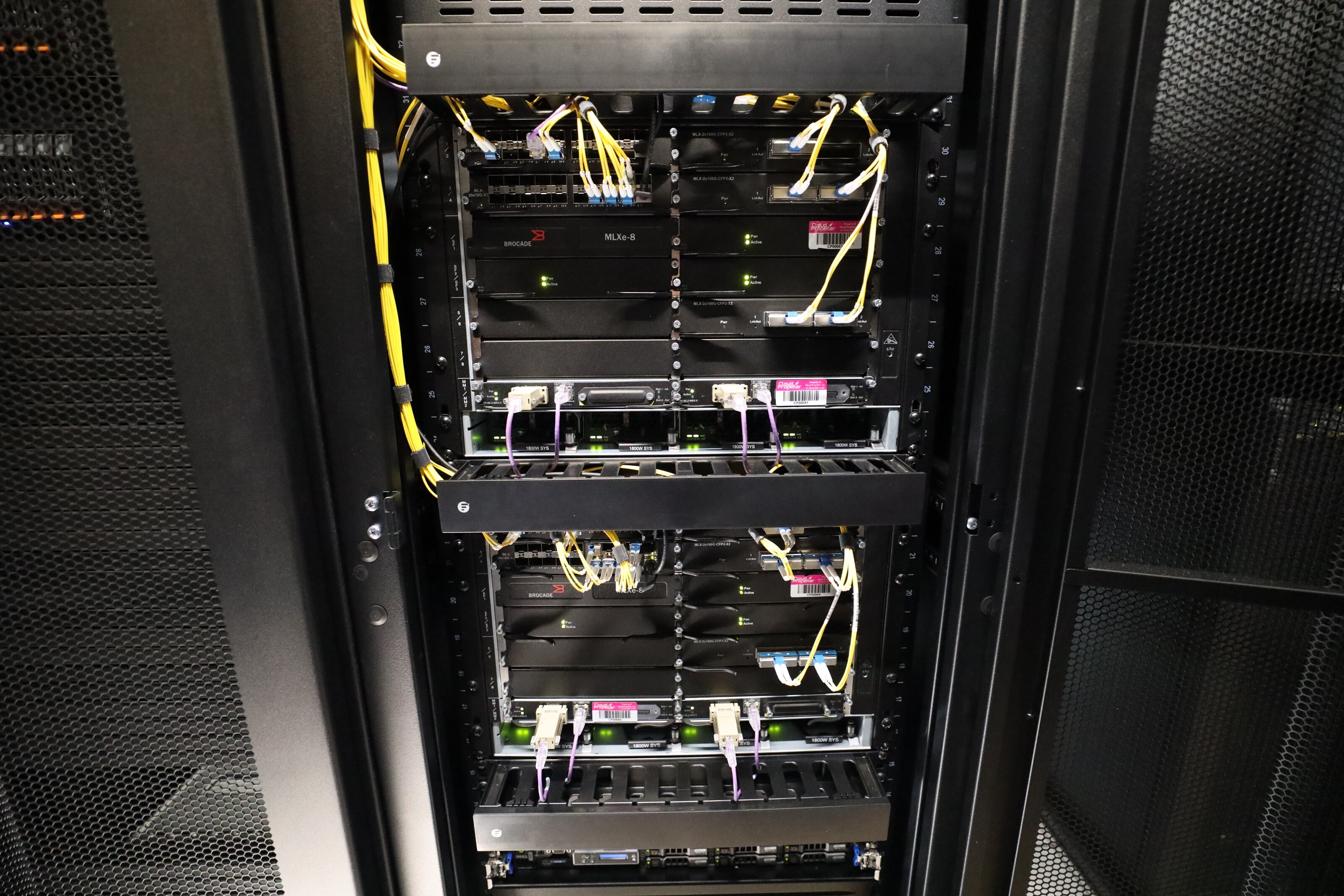
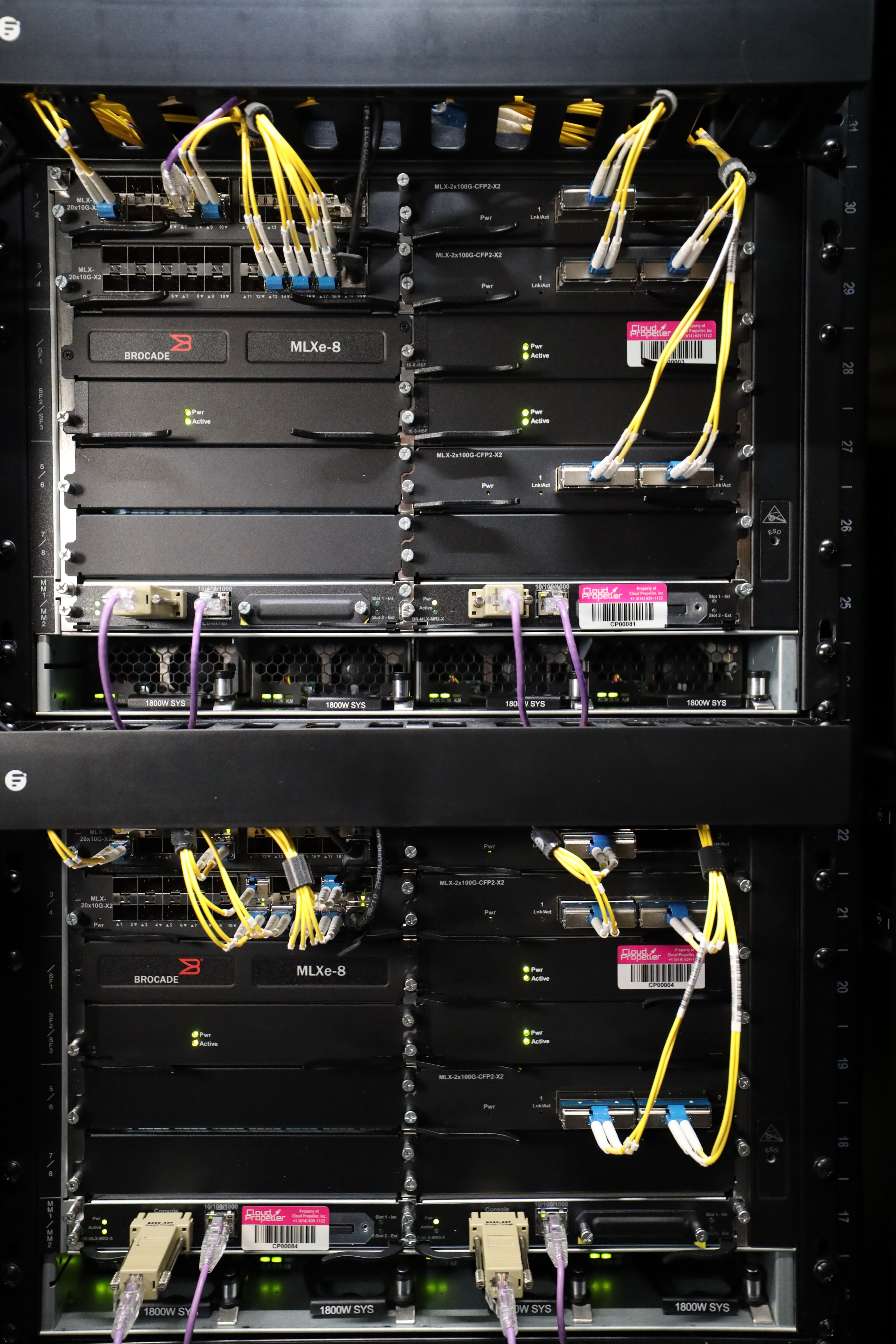
Our network architecture consists of a redundant Extreme Networks MLXe-8 Layer 3 core handling Internet edge and routing, a three-provider blended Internet service on the upstream side with direct peering at Ohio IX, and a redundant Arista top-of-rack pair inside every rack.
Each layer has one clear job and an obvious fallback when hardware fails. The sections below cover each component in detail — how clients get connectivity, the L3 core hardware that routes it, and the switching fabric that moves tenant traffic between hosts.




 AS20940
 AS6181
 AS16509
 AS31128
 AS54069
 AS32899
 AS30081
 AS10796
 AS16617
 AS13335
 AS7106
 AS8001
 AS394740
 AS14978
 AS63157
 AS19009
 AS396238
 AS54113
 AS33495
 AS2707
 AS394111
 AS22062
 AS2731
 AS13807
 AS397449
 AS6939
 AS394280
 AS14230
 AS393775
 AS395848
 AS55077
 AS63343
 AS39937
 AS63293
 AS62866
 AS25645
 AS40027
 AS53471
 AS15081
 AS64228
 AS3856
 AS397095
 AS63027
 AS25787
 AS394611
 AS26554
 AS394828
 AS32590
 AS393618
 AS20009
 AS46231
 AS40460
Upstream is delivered as a three-provider blended Internet service with direct peering at Ohio IX layered on top.
The three-carrier blend means there is no single-carrier dependency at the physical edge — if one provider has a fault, traffic continues over the others without client intervention. Ohio IX peering shortens paths to major cloud and content networks, cutting latency and unnecessary transit for common destinations. Clients get immediate upstream redundancy by default, with tenant-level uplinks and dedicated Spectrum options available through our meet-me-rack (MMR).
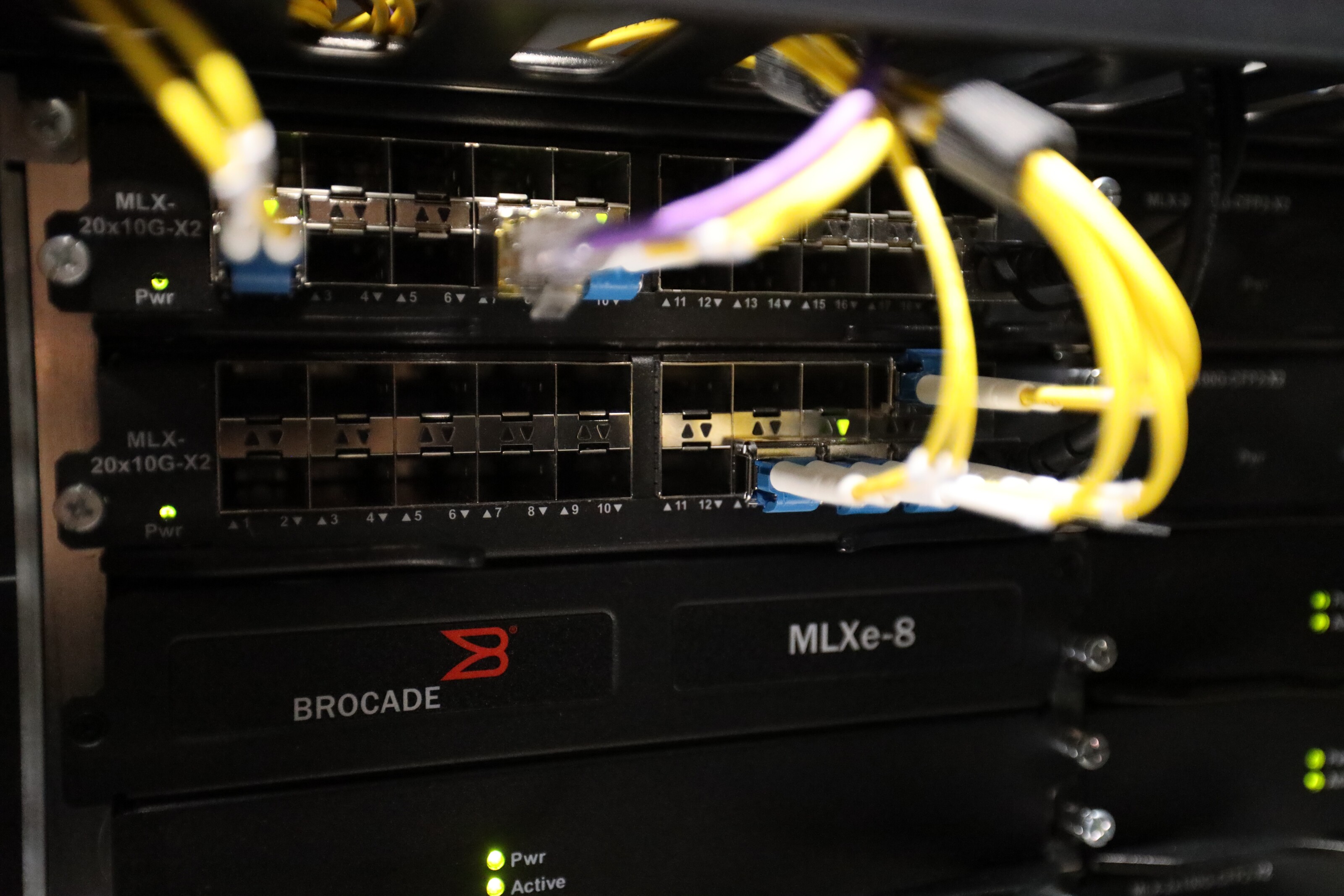
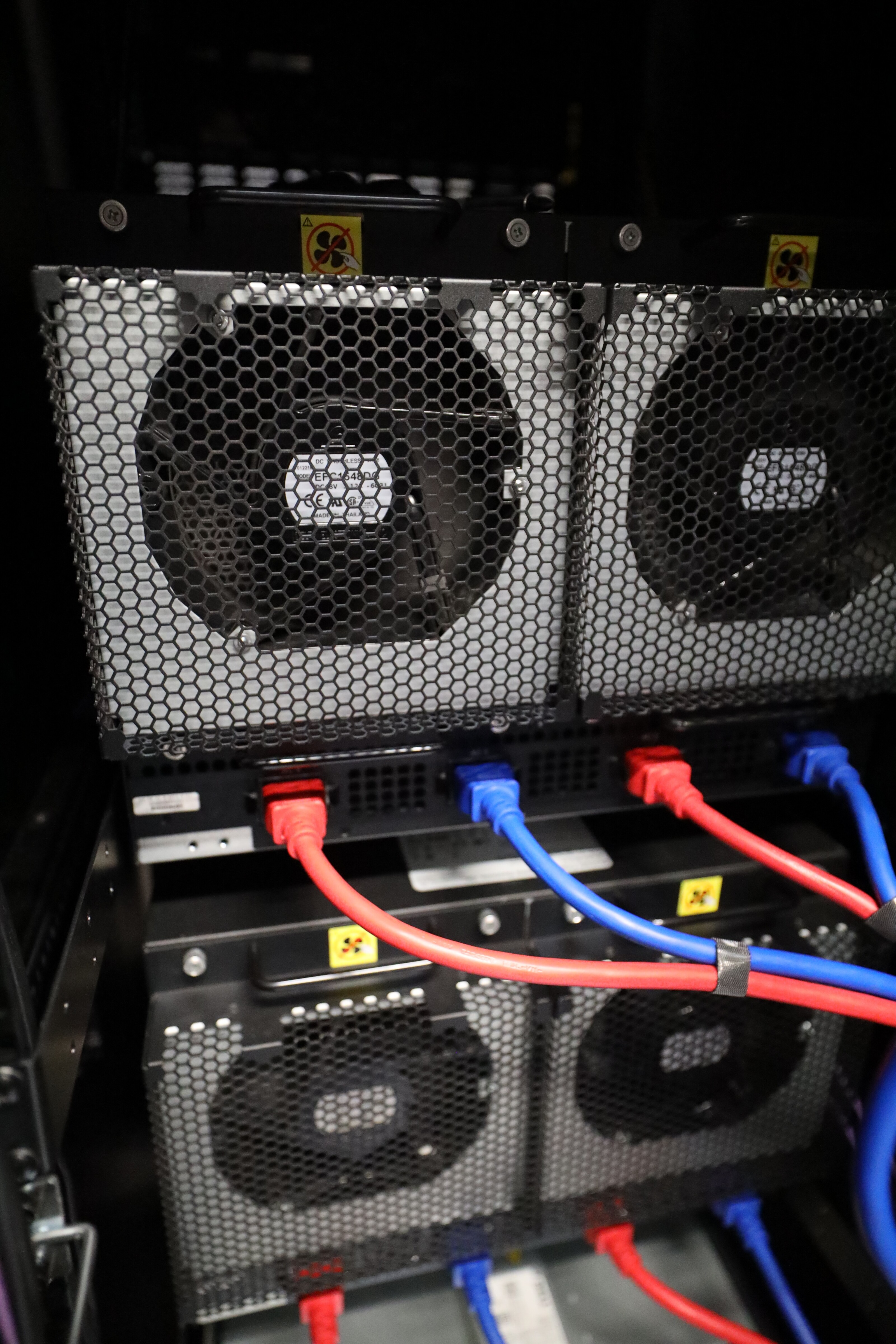
At the hardware layer, the Extreme Networks MLXe-8 is a carrier-class 8-slot routing platform delivering 3.84 Tbps of switch fabric capacity, 3.2 Tbps of forwarding capacity, 2.38 billion packets per second of routing performance, and support for up to 2.4 million IPv4 routes in hardware FIB. Its redundant management, switch fabric, power, and cooling architecture makes it well suited to high-availability routed core and Internet edge roles.
Legacy Brocade branding may still appear on the hardware shown; the MLX platform is (as of 2017) part of Extreme Networks.
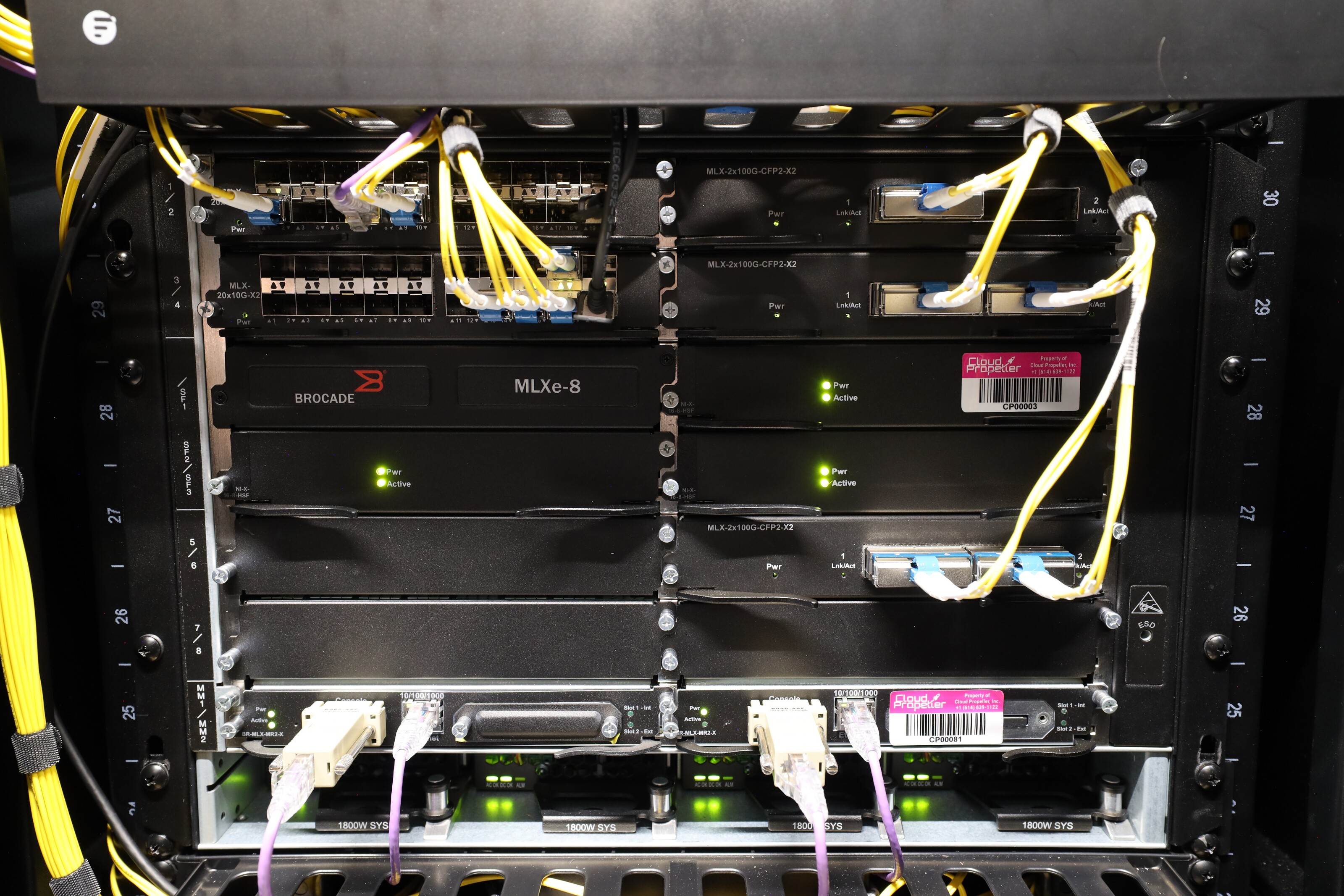
Extreme Networks MLXe-8 Layer 3 core routers in production, providing Cloud Propeller’s shared routed foundation for upstream transit, peering, and Internet edge connectivity.
Arista fabric carries east/west traffic between hosts and north/south traffic back toward the routed core. This layer is intentionally simple, fast, and redundant.
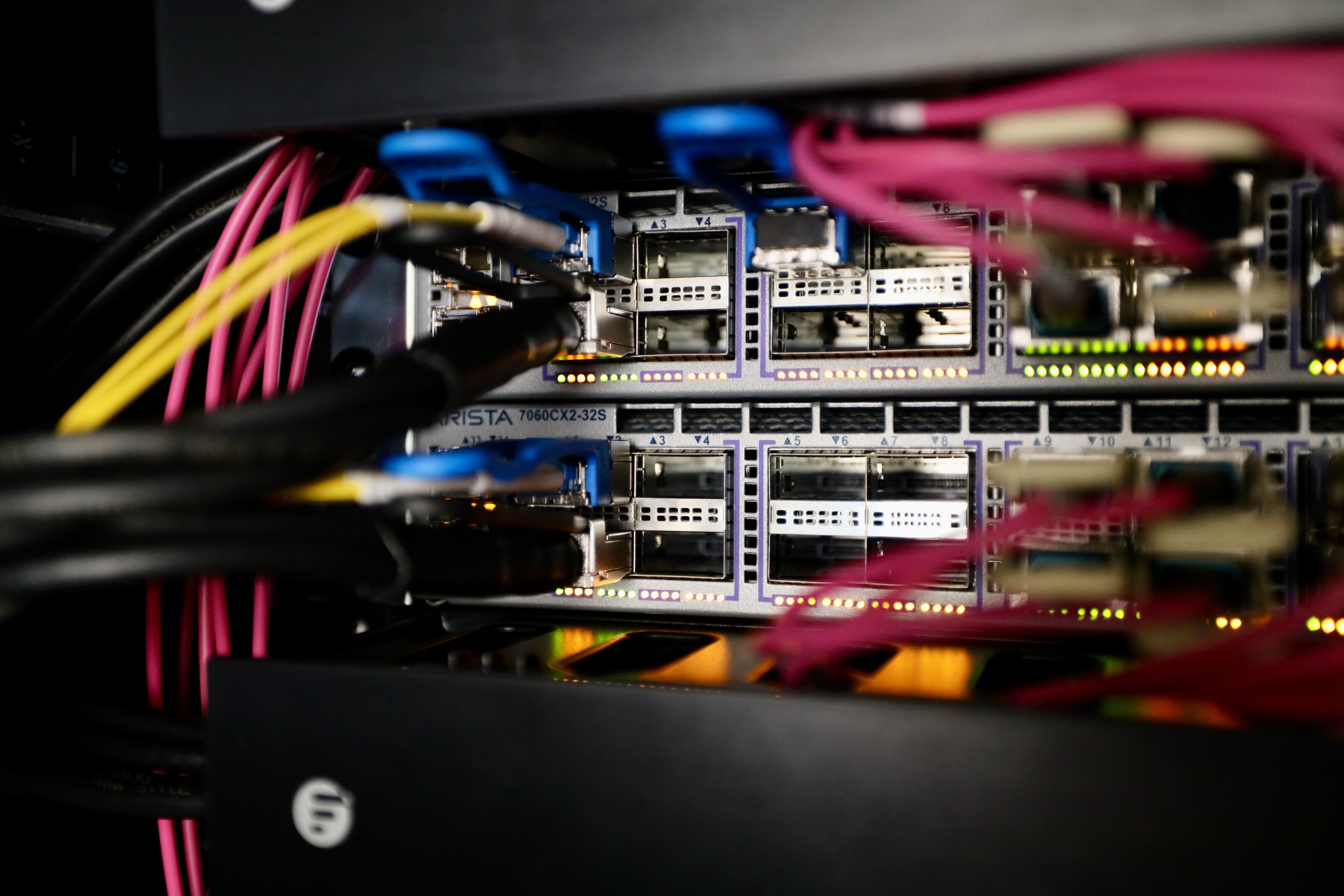
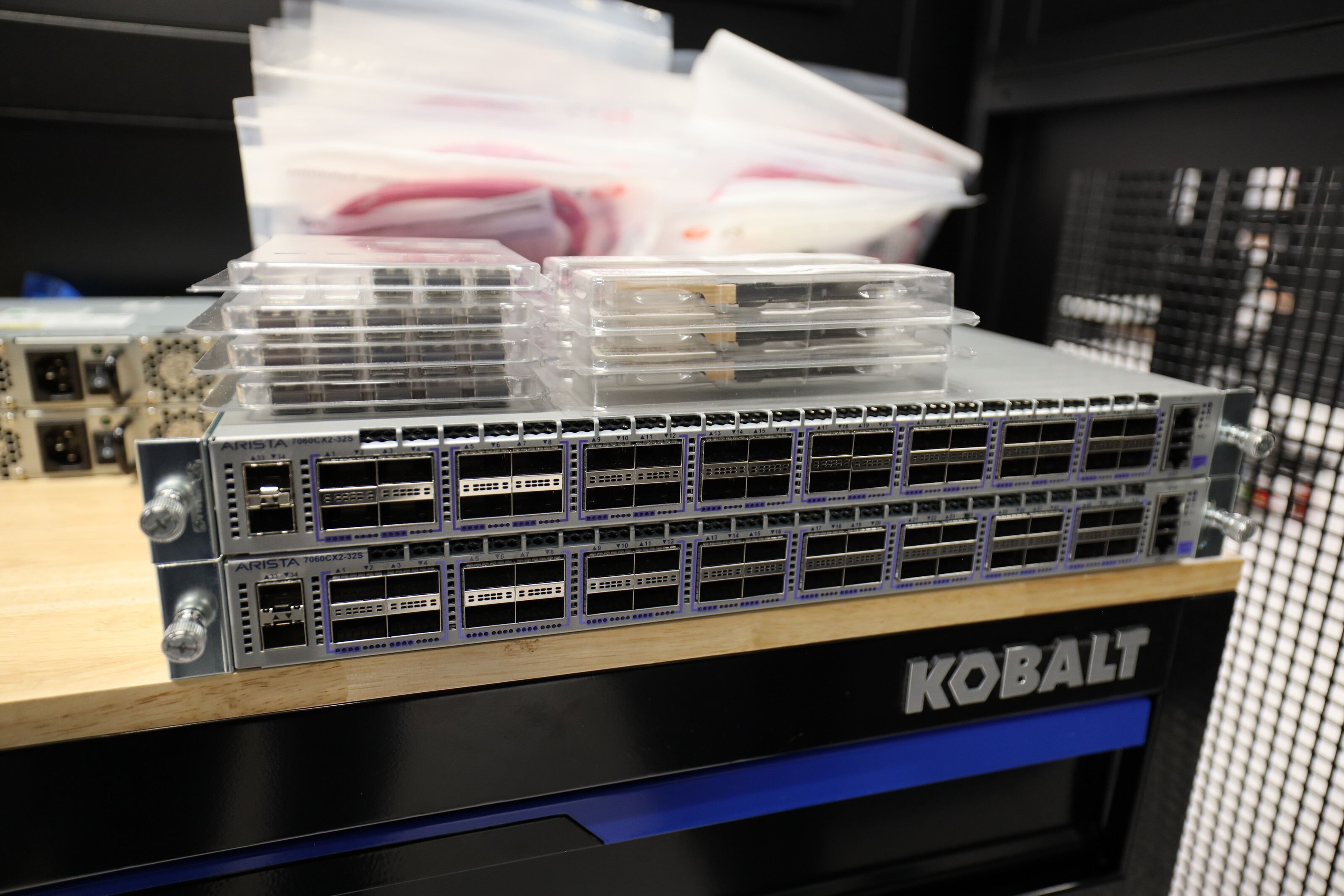
Every compute rack for both Mission Critical Compute (MCC) and General Purpose Compute (GPC) is built around a redundant pair of Arista DCS-7060CX2-32S top-of-rack switches. Hosts are dual-connected into that pair, and the ToR pair uplinks back into the Layer 3 core. This keeps switching local to the rack, minimizes failure domains, and preserves predictable behavior during maintenance or hardware faults.
MCC hosts connect at 4 × 100 Gbps per host; GPC runs at 4 × 10 Gbps per host. Both tiers follow the same operating model: redundant switching, deterministic forwarding, and minimal complexity in the shared physical fabric.
Cloud Propeller’s rack fabric is built on Arista DCS-7060CX2-32S switches, a 1RU high-performance top-of-rack platform delivering 6.4 Tbps of throughput. Arista’s cut-through forwarding keeps east/west latency low by design — switching latency as low as 450 ns per hop — complemented by a shared 22 MB packet buffer pool for burst tolerance under load. In practice, this allows Cloud Propeller to maintain a simple, redundant, and deterministic rack-level switching model across both Mission Critical Compute (MCC) and General Purpose Compute (GPC) environments.
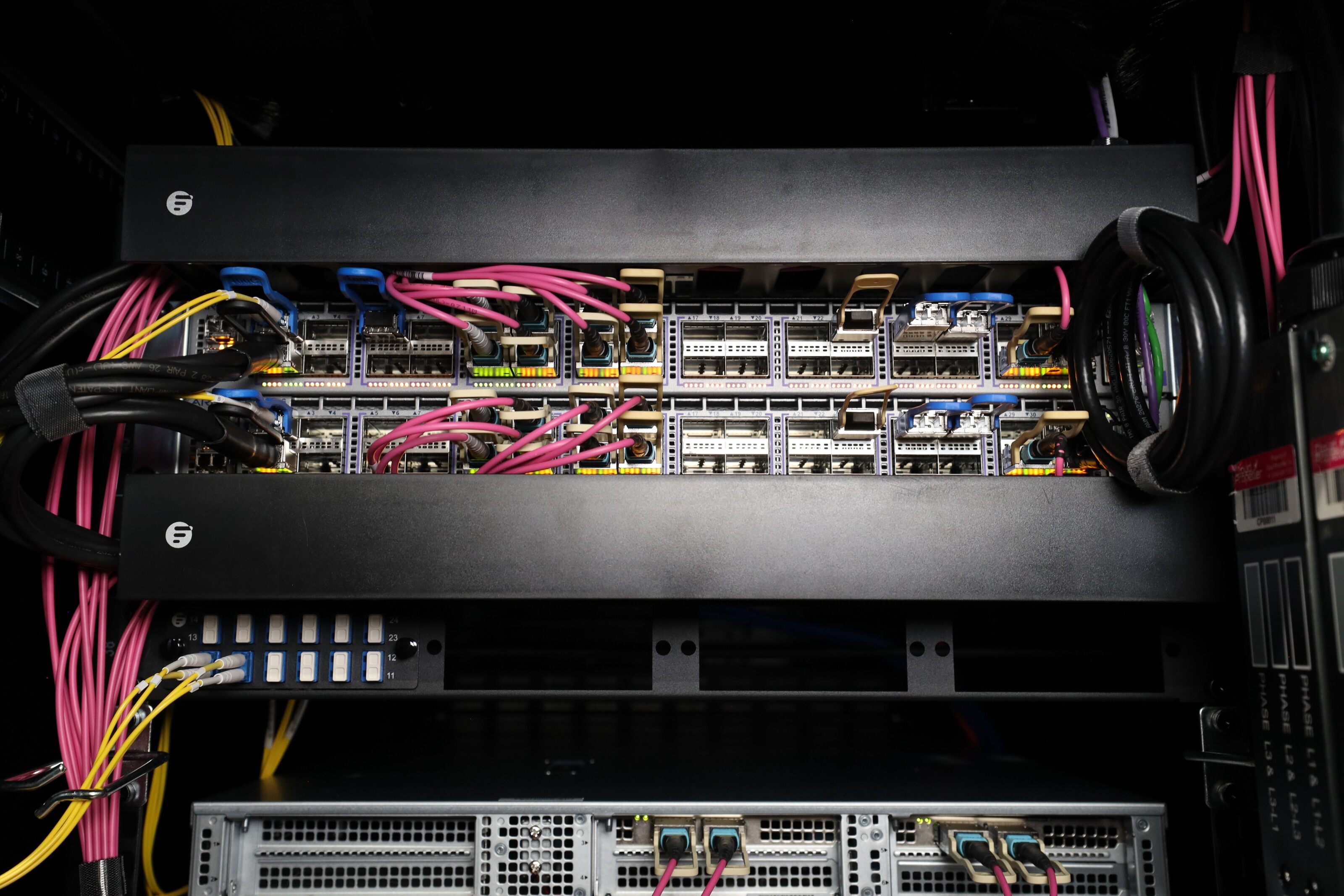
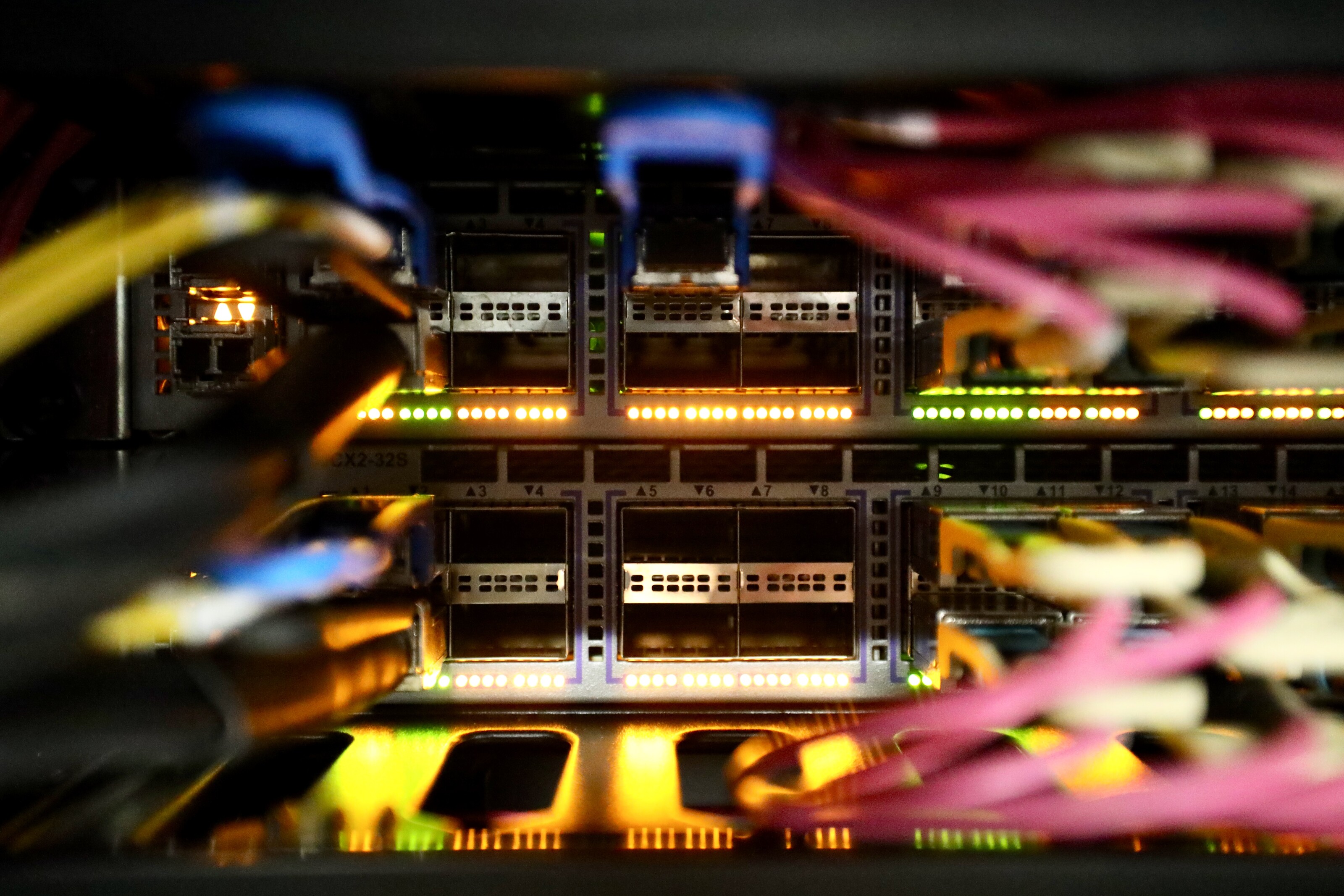
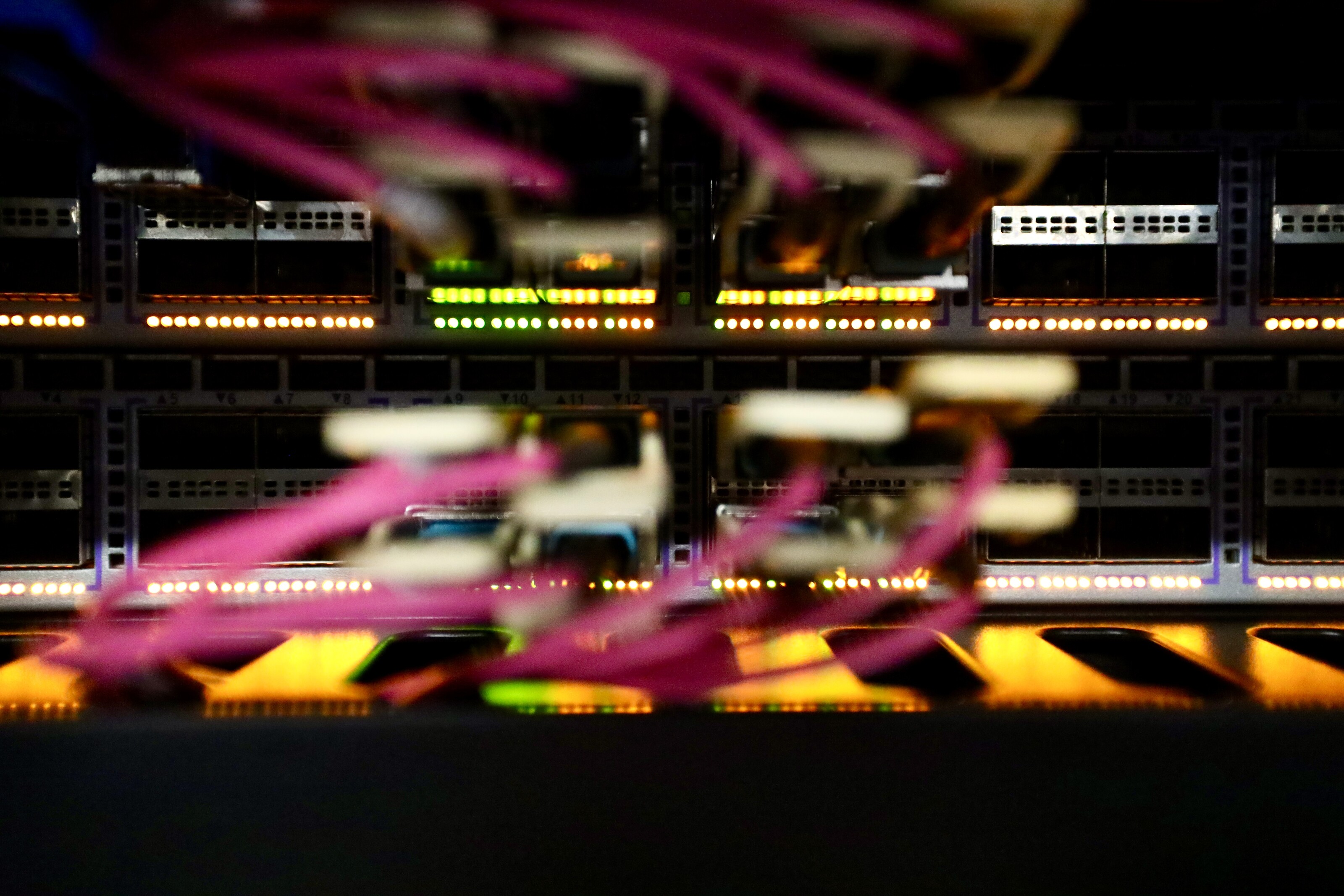
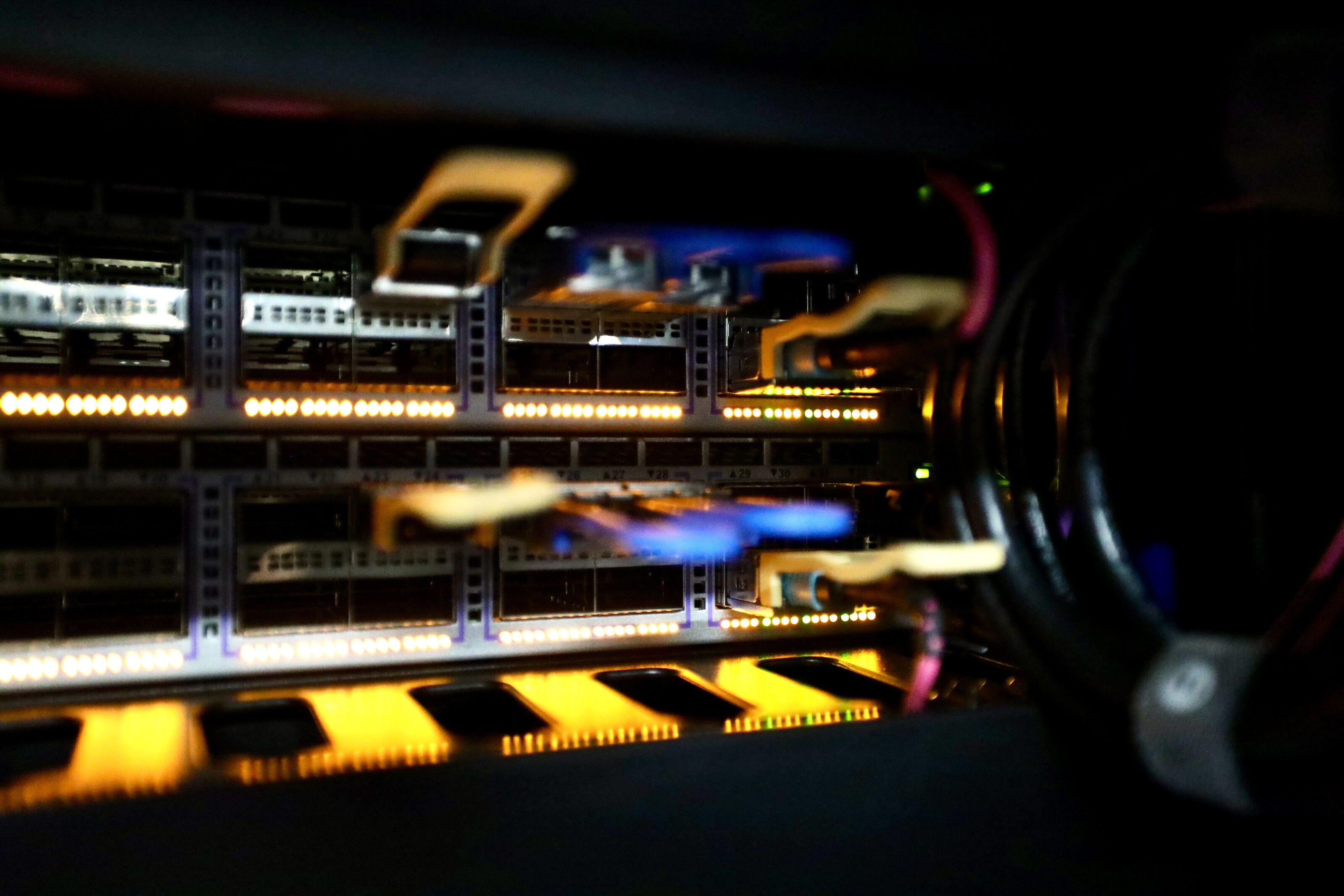
Arista DCS-7060CX2-32S top-of-rack switches in production, handling east/west traffic and uplinking each rack back into the Layer 3 core.
If your workloads are sensitive to carrier diversity, peering paths, routed design, or tenant uplink requirements, we are happy to walk through the network with you.
Or view the physical facilities.